

How to Write & Deliver the Perfect Wedding Speech | 312FILMS
A good wedding speech is not about being the funniest person in the room. It is about being the most honest one. The best toasts we have filmed over the years share the same bones: a real story, genuine affection, and a length that respects everyone’s dinner getting cold. Here is how to write one, and deliver one, that the couple will actually want to rewatch.
Start With One Story, Not a Highlight Reel
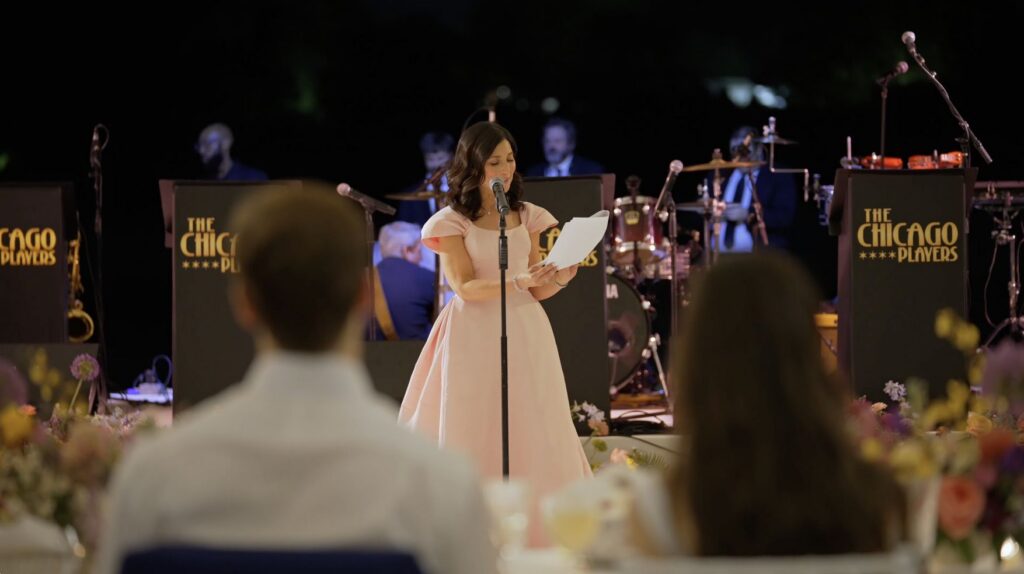
The most common mistake is trying to cover the couple’s entire relationship. Pick one specific moment that says something true about them: the first time you saw them together, the trip that tested them, the small thing one partner does for the other that nobody else notices. A single well-told story beats five rushed anecdotes every time.
Structure That Actually Works
- Opening: who you are and your relationship to the couple, in one or two sentences. Skip the “for those who don’t know me.”
- The story: the specific moment or memory, told with enough detail that people can picture it.
- What it reveals: connect the story to who the couple is together, not just who they are individually.
- The toast: a direct, sincere closing line, then raise your glass. Do not let the ending trail off.
Length: Aim for Two to Three Minutes
Written out, that is roughly 300 to 450 words read at a natural pace. Longer speeches lose the room, and at a wedding with several speakers, going long is the fastest way to make your toast the one people remember for the wrong reason. Time yourself out loud before the day; a speech that reads fine on paper often runs long once nerves slow you down.
Writing Tips
- Write it like you talk. Read it out loud while drafting. If a sentence feels stiff coming out of your mouth, rewrite it.
- Be specific. “They’re perfect for each other” says nothing. “She reorganizes his sock drawer every time she visits and he pretends to be annoyed” says everything.
- Skip the inside jokes that need a footnote. If half the room won’t get it, it does not belong in the speech.
- Go easy on the roast. A little teasing is fine; anything that could embarrass a partner in front of their new in-laws is not.
- Address both partners, especially if you are only close with one of them. Say something genuine about the person joining your friend’s or sibling’s life.
- Write the last line first. Knowing exactly how you are going to end it makes the rest of the speech easier to build toward.
Delivering It
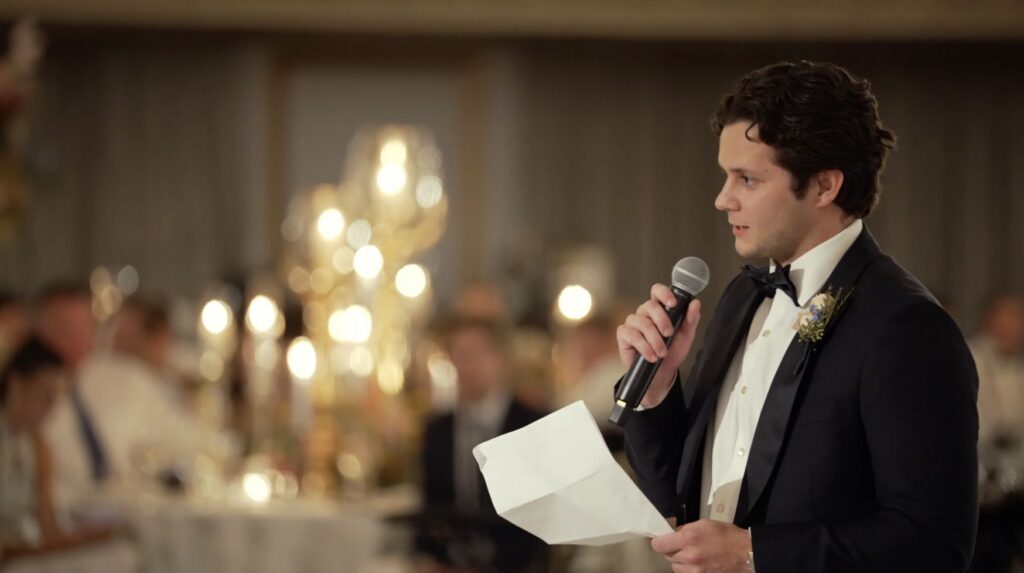
- Print it or use large notecards. Do not rely on your phone; a low battery or a text notification is not a risk worth taking.
- Slow down. Nerves speed everyone up. Pause after the opening line and after any laugh line to let the room respond.
- Look up. Glance at your notes, then deliver the line to the couple or the room. Reading straight down the whole time flattens the delivery.
- Hold the mic close and speak toward it, not down at your notes.
- Practice out loud at least three times before the wedding, ideally once in front of another person.
Getting Your Wedding Speeches on Film
Every 312FILMS wedding package includes a dedicated microphone during the ceremony and reception, so speeches are captured clearly rather than as background room noise. If your speakers get nervous in front of a full reception, we also offer rehearsal dinner coverage, up to four hours of filming at the rehearsal dinner where toasts tend to feel a little more relaxed. Those speeches can be worked into your wedding highlights, and you’ll also receive a full edit of the rehearsal dinner speeches on their own.
Wedding Speech FAQ
How long should a wedding speech be?
Two to three minutes is the sweet spot for most speakers. Best man, maid of honor, and parent toasts can run slightly longer; keep it under four minutes even then.
Who typically gives speeches at a wedding?
Most commonly the best man, maid of honor, and one or both sets of parents. Some couples also open the floor for a few other close family or friends.
Should the couple give a speech too?
Many do, usually a short thank-you to guests near the end of the reception. It does not need to match the length or structure of the other toasts.
What if I get emotional or lose my place?
Pause, take a breath, and glance at your notes. A brief pause reads as sincerity, not a mistake. Nobody in the room is grading you.
Planning your wedding day timeline and want your speeches captured properly? Check your date →
More from 312FILMS: Wedding Films · Chicago Wedding Venues · Pricing
From the Blog
 September 17, 2026
Downers Grove Wedding Videographer | 312FILMS
We’ve filmed a wedding at Lakes at Lacey, formerly known as Esplanade Lakes, a garden venue in Downers Grove. Here’s what we know from filming there…
Read More September 17, 2026
Hinsdale Wedding Videographer | 312FILMS
We’ve filmed weddings at two Hinsdale churches, an intimate 1875 Episcopal parish and a Catholic church tied to a real hometown love story. Here’s w…
Read More September 16, 2026
Wilmette Wedding Videographer | 312FILMS
We’ve filmed a wedding at Trinity United Methodist Church in Wilmette, the church made famous by Home Alone. Here’s what we know from filming there.…
Read More September 16, 2026
Buffalo Grove Wedding Videographer | 312FILMS
We’ve filmed a wedding ceremony at St. Mary Church in Buffalo Grove, one of the northwest suburbs’ well-established Catholic parishes. Here’s …
Read More