

The Sofreh Aghd: A Guide to the Persian Wedding Ceremony
Of all the wedding traditions we film in Chicago, few are as visually rich as the sofreh aghd, the ceremonial spread at the heart of every Persian wedding. It is a videographer’s dream: candlelight, mirrors, silk, sugar, and centuries of symbolism arranged in one frame. Here is what every element means, and how we film it.
What Is the Sofreh Aghd?
The sofreh aghd (literally “the spread of the marriage ceremony”) is an elaborate arrangement of symbolic items laid out on fine cloth, in front of which the couple sits during the aghd, the formal ceremony. Its roots reach back to ancient Persia, long before modern wedding traditions took shape, and every object on the spread carries a wish for the couple’s new life.

The Symbols on the Spread
The Mirror and Candelabras
At the center sits the aineh, the mirror of fate, flanked by two candelabras representing light and energy. When the bride lifts her veil, tradition says the groom’s first sight of her as his wife is her reflection in the mirror, one of the most cinematic moments of the entire ceremony.

The Sugar Cones
While the officiant reads, happily married women hold a silk canopy above the couple and grind two sugar cones together over it, showering sweetness onto the marriage. On film, the falling sugar catching the light is pure magic.
Honey
Immediately after the vows, the couple exchange honey, each dipping a pinky finger and offering it to the other, so their life together begins with sweetness.
Bread, Herbs, and Eggs
A decorated flatbread wishes the couple prosperous feasts, fresh herbs stand for a green and abundant life, and decorated eggs and nuts carry wishes for fertility and new beginnings.
Esfand, Coins, and Rosewater
Burning esfand (wild rue) wards off the evil eye, gold coins invite prosperity, and rosewater perfumes the air around the spread.
The “Bale” Moment
Our favorite tradition to capture: the bride does not answer the first time she is asked for consent. Or the second. Guests call out that “the bride has gone to pick flowers,” and only on the third asking does she say “bale” (yes), and the room erupts.
A Real Sofreh Ceremony on Film
Nikou and Anuj’s Indian-Persian wedding at the Chicago Botanic Garden centered on a stunning sofreh on the Rose Terrace, followed at the reception by the knife dance, the playful Persian tradition where the bride’s friends “ransom” the cake knife through dance before the cutting.
Read their full story here: Nikou & Anuj at the Chicago Botanic Garden, and see more of our Persian wedding films.
How We Film a Sofreh Aghd
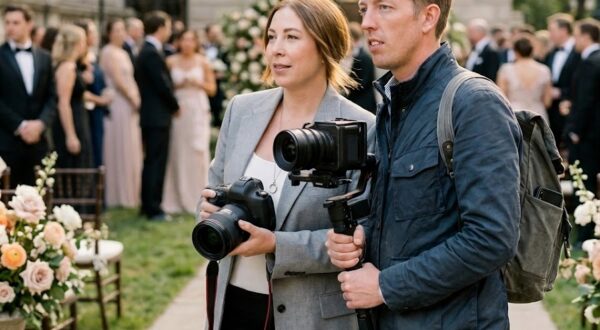
The sofreh rewards preparation. Before guests arrive, we film the spread in detail, every element deserves its own frame, because families often spend months assembling heirloom pieces. During the ceremony we work with two cameras: one stays on the couple and the mirror, the other captures the sugar canopy, the honey exchange, and the guests’ reactions to the “bale” moment. We never interrupt or restage a tradition; our job is to be in the right place when it happens naturally.
FAQ
How long does the sofreh aghd ceremony take?
Typically 30 to 60 minutes, depending on the officiant and the traditions included. We recommend at least an hour of dedicated coverage plus time beforehand to film the spread itself.
Can a sofreh aghd be combined with another ceremony?
Absolutely. We regularly film fusion weddings where a sofreh ceremony sits alongside Indian, Catholic, or Jewish traditions, sometimes across multiple days.
Where can a sofreh ceremony be held in Chicago?
Anywhere with a bit of floor space and good light. We have filmed sofrehs in hotel ballrooms, private homes, and gardens; the Rose Terrace at the Chicago Botanic Garden is among the most beautiful settings we have seen.
Planning a Persian Wedding in Chicago?
We film the sofreh, the bale, the knife dance, and every tradition in between with the care they deserve. Check your date →
From the Blog
 September 12, 2026
Clary Pfeiffer Photography + 312FILMS | Chicago Wedding Photographer
Clary Pfeiffer is a wedding photographer who shoots a film-and-digital hybrid, editorial-leaning style, often working alongside her husband Travis. She’s …
Read More September 11, 2026
Amanda Megan Miller + 312FILMS | Chicago Wedding Photographer
Amanda Megan Miller is a Chicago-based wedding photographer known for her vibrant and timeless style. Her approach to wedding photography is to capture the true…
Read More September 11, 2026
Emilia Jane Photography + 312FILMS | Chicago Wedding Photographer
Emilia Jane Photography is a Chicago-based photography company that specializes in wedding, engagement, and portrait photography. Emilia, the owner and lead pho…
Read More September 11, 2026
Kent Drake Photography + 312FILMS | Chicago Wedding Photographer
Kent Drake Photography is a Chicago-based photography company specializing in wedding and portrait photography. With over 25 years of experience in the industry…
Read More